Cross-Cultural Games: Why GaGa Ball is a Global Favorite
One Game, Shared by Every Community
A game doesn’t have to rely on language to bring people together. The best cross-cultural games create opportunities for people to move, laugh, solve problems, and compete using simple rules that everyone understands within minutes.
After gaining popularity in the mid-20th century, GaGa Ball has become one of those rare activities. Originally introduced through youth camps and community organizations, it is now played in schools, parks, religious organizations, recreation departments, and campgrounds across many countries.
Its success is not based on complicated equipment or lengthy instructions. Instead, it comes from creating an environment where children and adults from different backgrounds can participate almost immediately.
Your school might bring together students who speak many different languages, or your community center might welcome families of many cultures. In either case, GaGa Ball creates a shared experience that quickly moves everyone’s focus off differences and onto play.
How GaGa Ball Became a Cross-Cultural Favorite
Typically, children’s schoolyard games remain closely tied to the culture from which they originated. GaGa Ball has followed a different path.
The game spread because organizations discovered that it works well with groups that have different ages, languages, and levels of athletic experience. Summer camps introduced it to new participants each season. Schools added it to recess and physical education. Parks and recreation departments recognized that visitors rarely needed extensive instruction before joining a game.
One reason for its growth is that players learn by watching. Even if someone misses the verbal explanation, they can observe one round and understand the objective easily. This is a big plus in places where kids don’t all speak the same language.
Shared Rules Create Instant Connection
Successful schoolyard-style games for children and youth depend on rules that are easy to understand and easy to enforce.
GaGa Ball uses a straightforward objective:
- ■ Stay inside the GaGa Ball pit
- ■ Avoid being hit below the knees
- ■ Keep the ball moving
- ■ Respect the boundaries and other players
Because the rules are concise, disagreements become less common once expectations are established. Many schools and camps choose to display the rules near the GaGa Ball pit so every player begins with the same understanding.
Clear expectations create fairness, and fairness builds trust. That trust allows children from different backgrounds to focus on playing together instead of worrying about whether they understand the game correctly.
Everyone Can Play GaGa Ball
One of the biggest misconceptions is that GaGa Ball is simply another version of dodgeball.
While both involve avoiding a ball, GaGa Ball encourages continuous movement inside an enclosed playing area rather than eliminating players through high-speed throws. Players use open hands to hit the ball along the ground, creating quick reactions instead of overpowering opponents.
That design makes the game approachable for many participants because success depends on awareness, timing, and movement rather than size or strength.
Organizations often appreciate that GaGa Ball naturally supports mixed groups, including:
- ■ Elementary and middle school students
- ■ Summer camp participants
- ■ Church youth groups
- ■ Community recreation programs
- ■ Families during public events
Because success in GaGa Ball depends on awareness and timing rather than speed or physical strength, the game is also naturally welcoming to children of all abilities. ADA-compliant pits help ensure that welcome extends to the physical space itself.
Plus, since rounds are short, players who leave one game are back in the next within minutes. This steady rotation keeps large groups engaged without requiring complicated scheduling.
Movement, Respect, and Fair Play Travel Well
Games become global favorites when they reinforce values that are understood almost everywhere. Instead of emphasizing individual dominance, GaGa Ball creates an environment where every round offers another opportunity to participate.
The game encourages players to stay active, respect personal space, follow shared rules, and celebrate good sportsmanship. Those principles translate across cultures because they support positive group interaction regardless of where the game is played.
These qualities help explain why the game continues to appear in schools, camps, parks, and community programs serving increasingly diverse populations.
GaGa Ball Bridges Cultural Differences
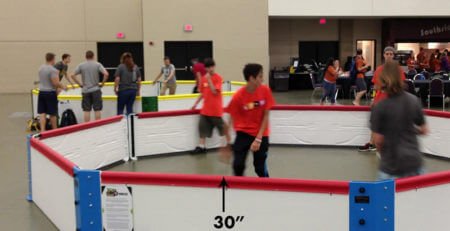
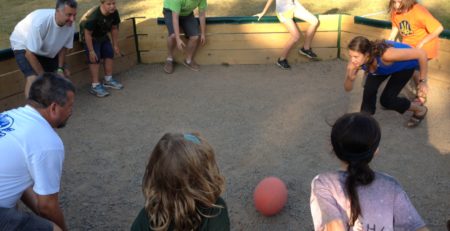
When children step into a GaGa Ball pit together, language matters less than watching, joining in, and cheering each other on. New players quickly pick up the rules just by observing, and returning players naturally step in to help newcomers along.
Shared experiences like this often build stronger connections than conversation ever could, creating an inclusive environment without requiring formal introductions or structured team-building exercises.
For schools serving multilingual student populations, recreation departments welcoming visitors from many backgrounds, or camps hosting children from different communities, GaGa Ball provides an activity that encourages interaction from the very first round. Rather than emphasizing differences, the game gives everyone the same objective and the same opportunity to succeed.
Simple Gameplay Supports Global Appeal
People usually want to know the same few things: how fast kids catch on, whether mixed ages can play together, and whether the game needs special gear.
GaGa Ball checks all these boxes because the rules are simple, the required equipment is minimal, and the game flexes to fit almost any space or group size.
A practical fit for active community spaces
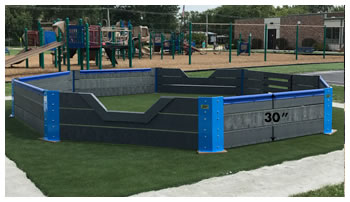
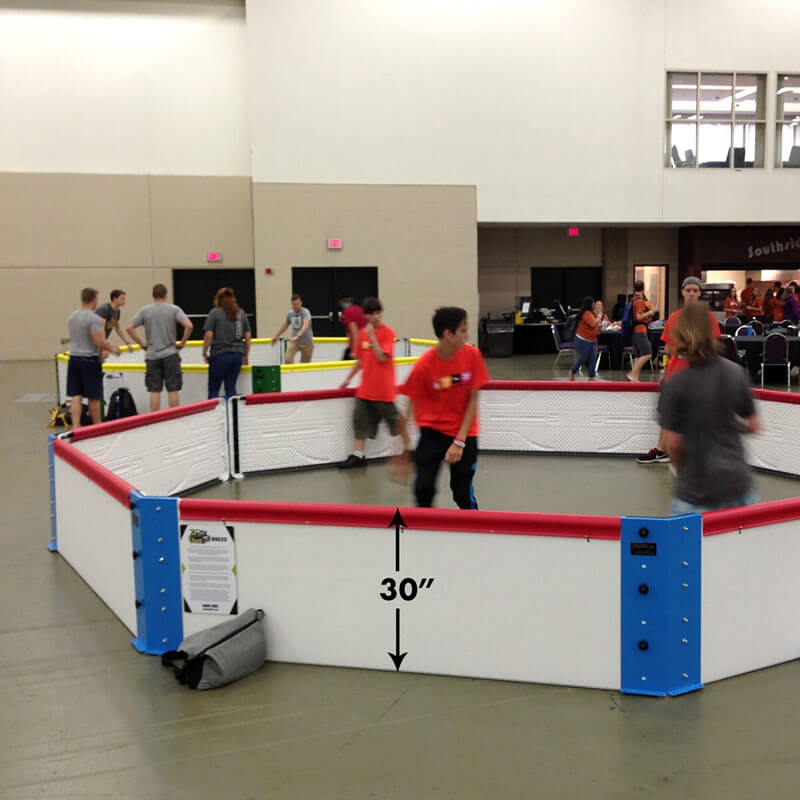
A well-designed GaGa Ball pit can become a centerpiece for recess, physical education, youth programming, or community events without requiring complicated setup. Choosing durable materials and a layout that fits your available space also helps reduce long-term maintenance while supporting years of active play.
Easy to Add in Schools, Camps, and Parks
Part of what keeps organizations coming back to GaGa Ball is how easy it is to fit in. Schools drop it into recess or PE without missing a beat. Summer camps use it to break the ice with new campers. Parks and recreation departments treat it as a go-to activity that keeps visitors moving all season long. Religious organizations lean on it for youth nights, vacation programs, and community gatherings.
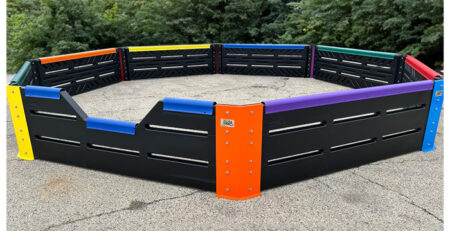
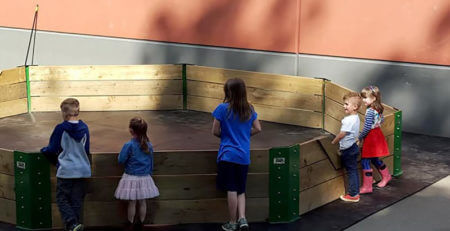
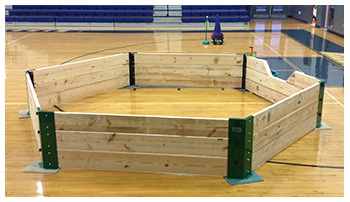
Because GaGa Ball pits are availablein multiple sizes and configurations, organizations can choose a design that fits their available space while supporting the number of participants they expect to serve.
What to Consider When Choosing a GaGa Ball Pit
- ■ Available installation space
- ■ Expected player capacity
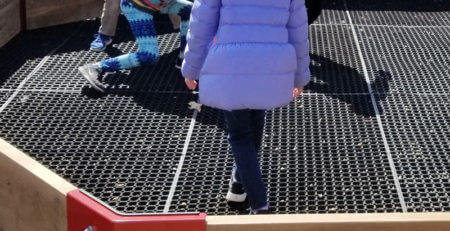
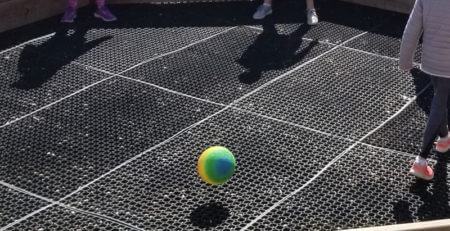
- ■ Surface and drainage needs
- ■ Long-term durability
- ■ Ease of maintenance
- ■ Accessibility for participants
These are the kinds of details that help make sure your GaGa Ball pit won’t be a passing fad, but a real fixture in your community.
Bring GaGa Ball to Your Community Today
GaGa Ball didn’t become a go-to activity across schools, camps, parks, and community programs by accident. With no long instructions, no need for a shared language, and no complicated gear, it works because it removes many of the barriers that usually make group activities harder to organize. It’s a pit, a ball, and a game everyone can jump into within minutes.
Whether you’re planning for a school with dozens of languages spoken in the hallway or a park welcoming visitors from all over town, a GaGa Ball pit gives people a reason to play together instead of standing apart.
If you’re looking for a durable, customizable GaGa Ball pit for your school, park, campground, religious organization, or youth program, Coach Cliff’s GaGa Ball Pits can help you find the right solution for your space.
Ready to Bring GaGa Ball to Your Community?
Call us for a quote or to get answers to any GaGa Ball questions you may have.